Getting your Team on the same page about AI
Ask five people in your business what "AI" means and you'll often get five different answers. For one, it's a chatbot. For another, it's a smarter search engine. Someone sees a tool that writes their emails, and someone else is quietly wondering whether it's coming for their job. None of them are wrong, exactly, but they aren't talking about the same thing.
That gap shows up differently from one business to the next. Some organisations have given their staff an approved AI tool. Some have people using personal tools the business doesn't know about. Some haven't started, and many people aren't sure what an AI tool even does. Whichever it is, the first problem is often the same: there's no common understanding of what AI is, what it's good for, and what's okay to do with it.
That matters because every later decision, about which tool to use, what to improve and what rules to set, tends to be easier when the people making it are on the same page. That's especially true for senior leaders, who are often asked to approve an investment in something they haven't had the chance to understand properly.
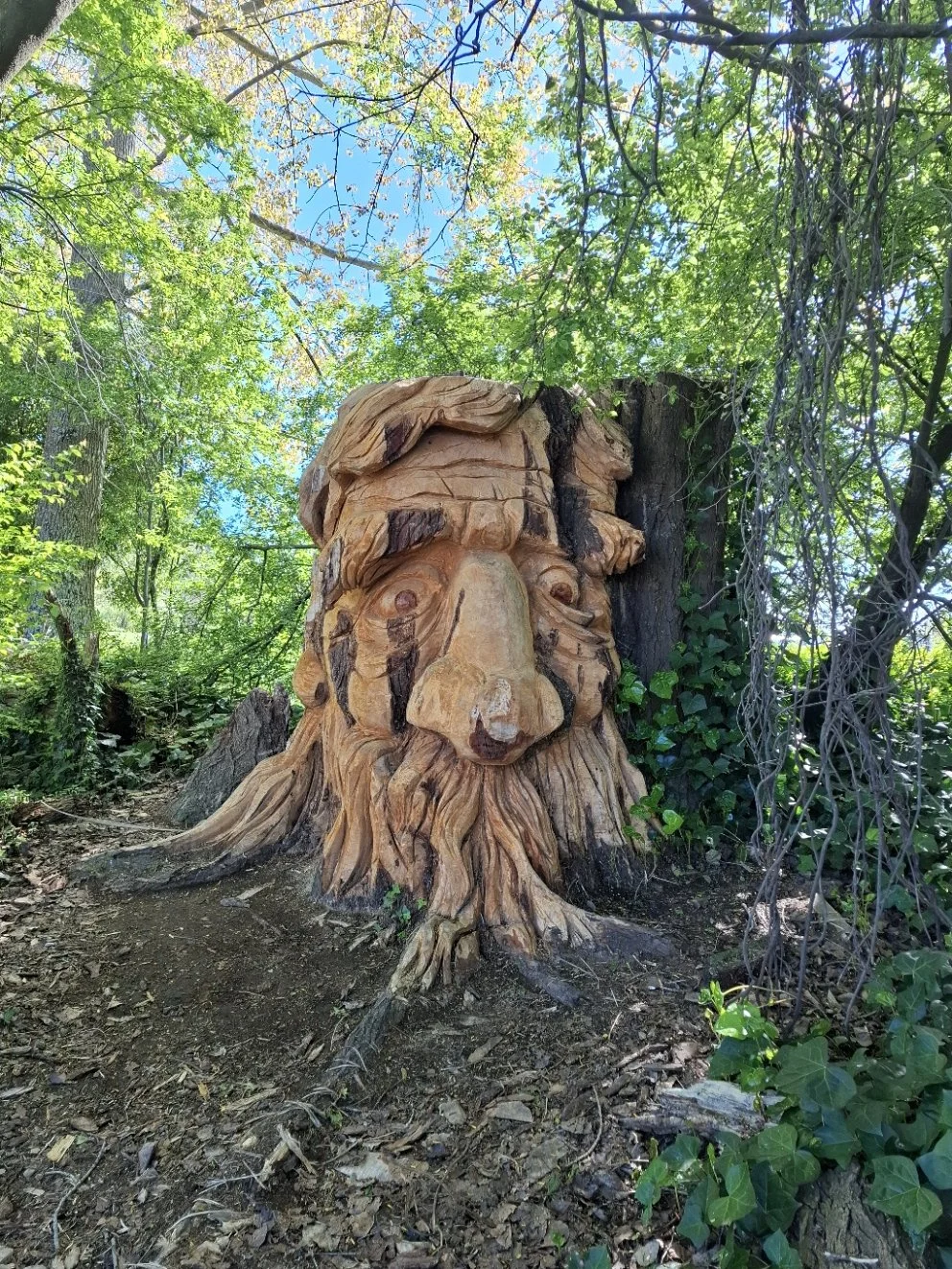
One of the works on the Geraldine Sculpture trail. Gerry, the Old Man of Raukapuka, carved from a standing tree stump.
The questions worth answering first
"Do our leaders understand how AI can be applied, and what they're being asked to invest in?" It often helps to understand the kind of work AI suits, and the kind it doesn't. Without that, ideas tend to come from whoever is most enthusiastic, and it's hard to tell a promising one from a distraction, or to weigh up what pursuing it would take.
"Do our people know what they can do with AI?" Is it fine to upload a contract to a personal account to ask questions about it? What about an AI note-taker in a meeting where confidential topics come up? Many staff would like clear answers, and many leaders aren't sure they could give them.
"Are we talking about the problem we're actually trying to solve?" Conversations about AI often start with the tool before the problem is clear. Starting with what's slowing the business down, such as double handling, information that's hard to find, or work waiting on admin, makes it easier to see what kind of help would matter.
"How do we know what to focus on first?" AI could be applied almost anywhere, so it's easy to start with whatever is loudest. Agreeing what the business is trying to achieve helps make sure any change supports those priorities.
How we get everyone on the same page
When these questions come up, I often suggest a short, fixed-scope piece of work rather than a big programme. It generally has three parts:
A short planning conversation. So the session reflects your business, your tools and your people, rather than being an off-the-shelf presentation.
A facilitated session with your leadership team. Not a lecture. We work through what AI is and isn't in plain language, with examples that relate to your business, so leaders come away understanding where AI could be applied and what they'd be investing in. We look at the risks and the guardrails worth having, and the team's own concerns and priorities go on the table.
A short findings and recommendations summary. The key themes, where AI or automation might help, some observations on readiness and risk, and a sensible set of options for what to do next, including the option of doing nothing yet. We then walk through it together.
The aim is a practical first view of where AI could help and what to consider next. It doesn't commit you to a platform, a vendor or a follow-on project with us. If the best next step is something small, or something you can do yourselves, that's a perfectly good outcome.
A few ways to start
Not every business is at the same stage, so there's more than one way in.
AI Fundamentals for Business Leaders. For teams who first need a shared baseline: what AI is, where it often helps, where it tends to disappoint, and what leaders need to understand before investing.
AI readiness and roadmap. The leadership session and findings described above, for organisations that want an independent view of where they stand and what to consider next.
AI and automation opportunity discovery. For when you suspect a specific process is worth improving but aren't sure which one, or whether AI is the right tool. It's a standalone piece of work, and it doesn't commit you to working with us for whatever comes next.
These often work well in sequence, but each can stand alone.
Is this useful for you?
It might be if:
people in your business are using AI, but there's no agreed approach
you're not sure what staff can safely put into an AI tool
you'd like your leaders to understand where AI could be applied, and what they'd be investing in
you want an independent, practical view before committing budget
If any of that sounds familiar, let’s have a 30-minute chat about what's getting in the way of your business. There's no obligation, and sometimes the most useful outcome is clarity about what not to do yet.
We use the AI Contribution Scale defined by Blair Enns to disclose the use of AI in our written content. This article is rated as: AI-4: AI Drafted. The content was drafted by Claude from our own content and ideas, we then refined the output.